

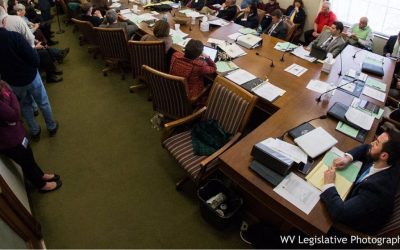
HB 5053 is scheduled to be taken up by the WV House Public Education subcommittee on Thursday, February 12, at 1:00 PM. The bill seeks to create a 90 day waiting period to withdraw to homeschool if a student is involved in any truancy proceeding or pre-proceeding. Regardless of the motivation behind the bill, there are very real problems with the wording and outcomes of this bill, should it pass and become law.
You can read the bill here.
You can submit comments on the bill here.
We have summarized problems that we perceive with HB 5053 below. We encourage you to consider the bill as well as our list of concerns. Then decide if you would like to submit a comment to the subcommittee by tomorrow noon.
The bill is based on a false premise. For their own well-being, many students (some of which may have had several absences) NEED to leave the public school system quickly.
- This bill is based on a FALSE PREMISE that ALL families who file an NOI to homeschool while involved in a truancy process are simply looking for an “easy out”, and it omits safeguards for the students who have a LEGITIMATE NEED to exit a public school system in an immediate timeframe.
- There can be compelling reasons for a student’s absence from school: severe bullying, personal conflict or bullying from a teacher, mental health issues, etc. Assuming they are looking for an “easy out” and requiring such students to keep attending school could indeed cause harm to them.
- According to the National Household Education Survey, the number one reason parents choose to homeschool is concern about school environment including classroom safety, drugs, bullying, or negative peer pressure. In other words, they withdraw from public school for their children’s safety. Unfortunately, the threat of injury is not an excuse for missing school under West Virginia law.
- Lacking reasonable safeguards for such situations, this bill essentially prohibits well intended parents from acting in the best interest of their child.
Existing law already provides the best solution.
- The existing law provides a mechanism for superintendents to seek to deny the homeschooling option by filing a petition in court. This is the best solution for whatever problem exists. It maintains due process, enables parents to act in the best interest of the child, and gives superintendents a directive to act whenever the parent is not acting in the best interest of the child.
- Rather than using the existing authority and maintaining due process, this bill creates an “easy out” for the school system by enacting a blanket prohibition that has a high likelihood of negative impact on some children’s well-being.
- Even if a majority of truants did not have legitimate reasons to withdraw to homeschool, some students do have a very real need to leave the school system quickly. Provisions must be made to preserve their well-being!
The bill raises equal protection concerns by unfairly targeting a single category of public school alternatives – those seeking to homeschool.
- There is no mention of, or impact on, students schooling under other exemptions, like Hope or microschools.
The bill is poorly written:
- It doesn’t define when the “pre-petition process” begins. It is possible that this process could start as soon as the student has three unexcused absences. The bill is susceptible to subjective and inconsistent application, i.e. overreach and misuse.
- The factual findings in the bill are neither “factual” nor “findings.” They are merely negative assumptions about homeschooling without citations to objective evidence to support the need for the legislation in the first place. The “findings” seem based on negative assumptions rather than objective facts.
- Finding (2) is not at all germane to the bill’s stated purpose or the provisions to be enacted in section (b). Rather it seems placed there to simply cast aspersion toward homeschoolers, generally.
- The directive for the Department of Education to survey families who leave the public school to homeschool is not germane to the stated purpose of the bill. Further, the survey again only targets one group of non-public school alternatives (homeschooling, and no others). Once again, this raises equal protection concerns regarding the constitutionality of the directive.
- The language for the survey is broad and invites the State to invade the privacy of families. If the goal of a survey is to collect accurate data that can be used to better identify the drivers of the decision to file an NOI to homeschool, that research is currently available.
-
- COE – Homeschooled Children and Reasons for Homeschooling by the National Center for Educational Statistics
- How many US students are homeschooled, and for what reasons? | Pew Research Center
-

Recent Comments